TNCHS Research Library Tanza National Comprehensive High School

4 cards for “administrative efficiency” · Clear filters

Sort Relevance Newest

  1. TNCHS-2025-FAC-007

    Streamlining School Administrative Processes: The Development of an Integrated Tool for the School Forms of Tanza National Comprehensive High School

    Relly Aris A. Tagsuan, Alquinn D. Lobos, Ted Jayson B. Guadamor

    SY 2024–2025FACCapstone / innovation

    Purpose: This research aimed to develop and evaluate an integrated tool for managing school forms at Tanza National Comprehensive High School (TNCHS) – Senior High School, addressing inefficiencies in traditional document management. The study explored the tool's key requirements and features, ISO validator evaluations, user feedback, and differences in perspectives between the two groups. Design/methodology/approach: Employing the Fourth Generation Technique, the study emphasized rapid prototyping, modular design, and code reusability. A needs assessment questionnaire was administered to senior high school advisers, followed by iterative tool development and evaluations using the ISO 25010 framework. Feedback was gathered from students, teachers, and administrative staff to refine the tool. Findings: The tool achieved high ratings in functionality, performance, and maintainability based on the ISO 25010 framework. However, discrepancies emerged between ISO validator and user evaluations, particularly in interaction capability and usability, highlighting the need for enhanced training and user-centered design. Security and safety were identified as areas requiring improvement, underscoring the importance of regular audits and updates. Research limitations/implications: The study is limited by its focus on a single school and reliance on self-reported data. Future research could expand the scope to include diverse institutions and conduct longitudinal assessments of the tool's impact. Originality/value: This research demonstrates the practical application of modern development techniques to streamline school form management. By integrating technical and user-centric approaches, the study offers a replicable model for enhancing administrative efficiency in educational institutions.
  2. TNCHS-2025-FAC-004

    Fostering Leadership Resilience in Times of Educational Reform: Insights From Tanza, Cavite's Integrated Schools

    Ted Jayson B. Guadamor, Nico Llet N. Guadamor

    SY 2024–2025FACQualitative

    Purpose: This study explores school leaders' perceptions of leadership resilience in implementing new curriculum in Tanza, Cavite. It examines challenges faced, strategies for resilience-building, and the impact of resilient leadership on school performance and curriculum outcomes. Methodology: The research employs a qualitative descriptive design. Data were collected through semi-structured interviews with ten purposively selected school leaders from integrated schools in Tanza, Cavite. Thematic analysis was used to identify recurring themes and patterns in the participants' responses, focusing on leadership adaptability, emotional intelligence, and resource management. Findings: The study reveals that school leaders demonstrate resilience through adaptability, empathy, and innovative approaches to curriculum implementation. Key challenges include resource limitations, operational constraints, and the emotional labor of leadership. Strategies such as professional development, fostering collaboration, and promoting well-being were found to enhance leadership resilience. Resilient leadership was linked to improved staff morale, teacher empowerment, and positive school outcomes. Research Limitations/Implications: The study is limited to integrated schools in a specific locale and relies on self-reported data, which may introduce bias. Further research could explore broader contexts or employ mixed methods to strengthen findings. Originality/Value: This research contributes to the understanding of leadership resilience in the unique context of curriculum reform in integrated schools. It provides actionable insights for school leaders, policymakers, and stakeholders to strengthen leadership practices under educational reforms.

  3. TNCHS-2025-FAC-002

    Development of Sexual Education Android Application for Senior High School Students of Tanza National Comprehensive High School

    Karl Angelo L. Luteria, Alvin O. Flores, Noreen S. Malabanan

    SY 2024–2025FACCapstone / innovation

    In the contemporary educational landscape, the role of comprehensive sexual education is pivotal in shaping the well-being and informed decision-making of adolescents. Senior high school students, in particular, are at a critical juncture where understanding sexual health, consent, relationships, and personal boundaries is essential for their overall development. Recognizing the evolving needs and challenges faced by students today, Tanza National Comprehensive High School is committed to enhancing its educational offerings through innovative solutions. One such initiative is the development of a Sexual Education Android Application tailored specifically for its senior high school students.

  4. TNCHS-2024-FAC-003

    Solid Waste Management in Tanza National Comprehensive High School: Awareness and Practice

    Marjorie Ann M. Herrera, Cerwin Edd D. Herrera

    SY 2023–2024FACQuantitative

    Purpose: The study aims to determine the level of awareness and practices of solid waste management among the students and to find out if there is a significant relationship between their awareness of and their practices of solid waste management. Design/methodology/approach: This research employed a descriptive-correlation design. Selecting the participants involved voluntary sampling among senior high school students. This study used an online survey using instruments adapted from the research by Abolucion et al. (2012), which is about the level of awareness of the students towards solid waste management, and Cahoy (2013) focused on the solid waste management practices in terms of segregation, reduction, reuse, recycling, and disposal. The data analyses used were percentage distribution, weighted mean, and chi-square. Findings: The results revealed the students are knowledgeable and mindful of solid waste management. These students have an acceptable habit of segregating, reducing, and reusing waste materials, while they fall short in recycling and disposing of garbage. The student's awareness of solid waste management does not affect their disposal practices; however, their practices in terms of segregation, reduction, reuse, and recycling influence their awareness of solid waste management. Research limitations/implications: This study was limited to senior high school students at Tanza National Comprehensive High School. Originality/value: This study focused on the awareness and practices of the students regarding solid waste management.

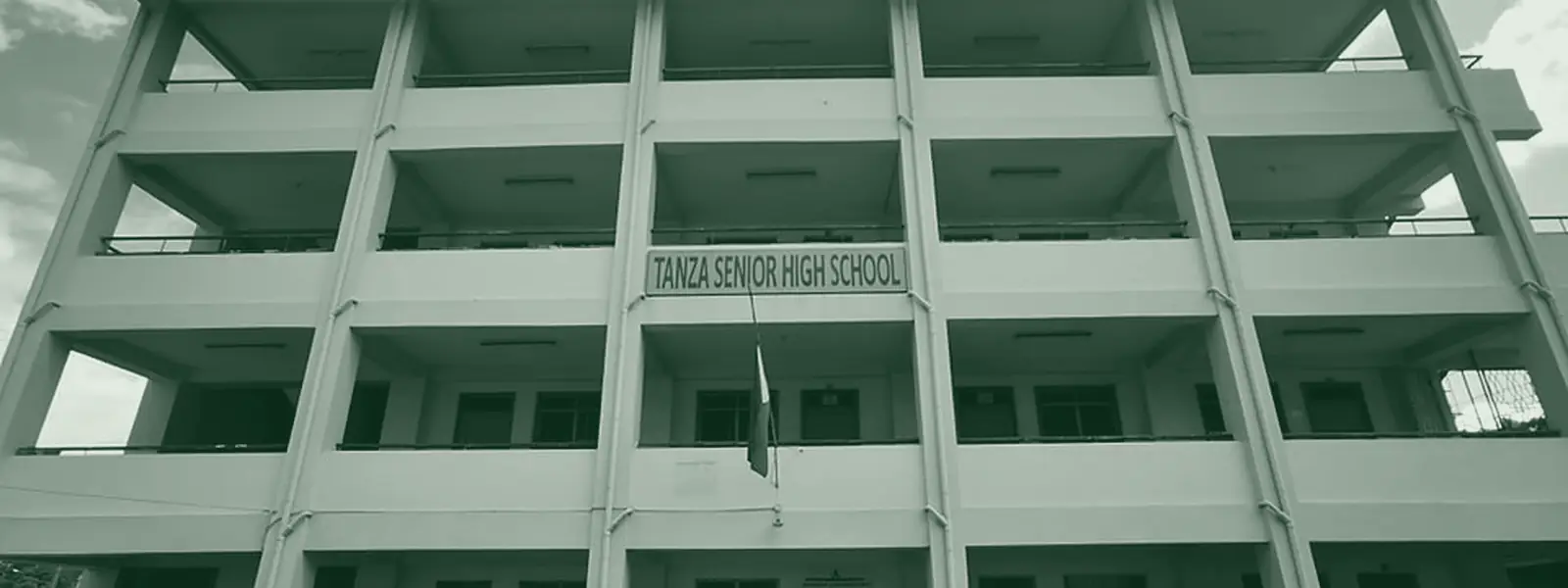
Plate · Tanza Senior High School building